العربية Español Français Pусский Asian Languages
BIC | Bank Information Center Photo Photo
Update

2007 Spring Meetings of the World Bank/IMF

Read the latest information on World Bank and civil society events organized around the upcoming IMF/World Bank Annual Meetings and how to get involved.

As new information is made available, BIC will continue to update this page with relevant information regarding civil society activities and the Spring Meetings.


In this update:

  1. Useful websites
  2. World Bank meeting dates and details
  3. Development Committee and IMFC agendas
  4. Events
  5. Who’s in town?

1. Useful websites

  • The event and ‘who’s in town’ information included in this email is drawn from www.ifiwatchnet.org. Please post your events and contact information on that website to ensure that they’ll be included in these emails.
  • The World Bank 2007 Spring Meetings webpage provides information on accreditation and World Bank-sponsored events.  
  • BIC’s 2007 Spring Meetings webpage features an online version of this email. It will be updated several times a week. 

2. World Bank meeting dates and details

The Spring Meetings will be held over the weekend of April 14-15 at the World Bank and IMF Headquarters in Washington, D.C. As in previous years, a Program of Policy Dialogues for Civil Society Organizations (CSOs) will be organized between April 12-16, 2007.

Accreditation information – Closed

All civil society organization representatives planning to attend any official events, including the Civil Society Dialogues, must be accredited. Accreditation requests must be submitted through the World Bank's online registration system, which opened this week and closed on March 23.

You will be notified within 21 days of your application. Applications are reviewed by the World Bank External Relations and External Affairs offices, as well as by the Executive Director representing the country from which your request originates.

Location of World Bank events and registration/badge pick-up:

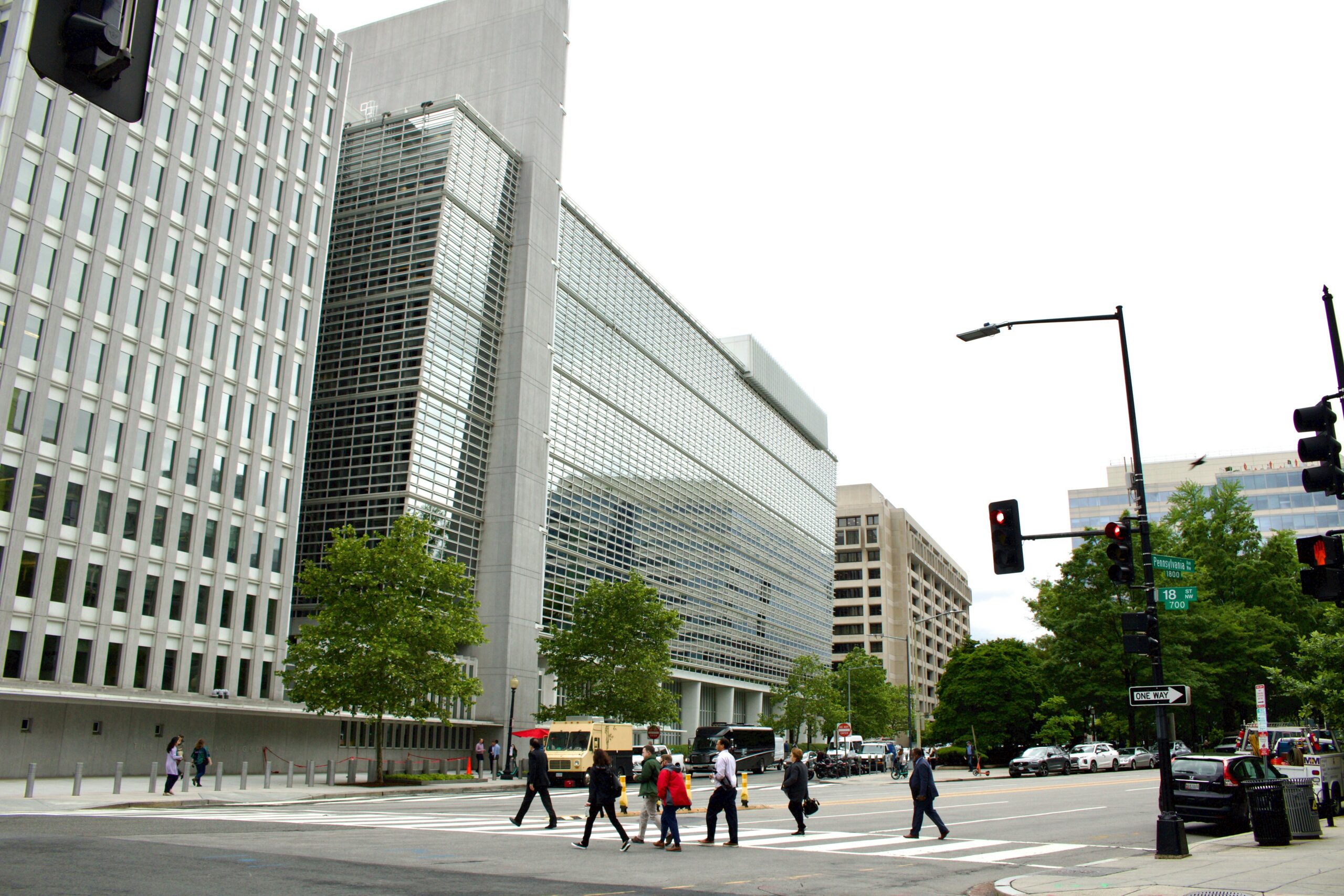
  • The World Bank Civil Society Forum Dialogue Sessions will be held at the Bank's Main Complex Building (1818 H Street, NW) on the C1 level in rooms MCC1-100 and MCC1-110.
  • World Bank press events will be held at the Press Room located in the HQ1 building of the International Monetary Fund (700 19th Street, NW).
  • The World Bank’s Spring Meetings Registration office and badge pick-up will be located in the World Bank H building (600 19th Street, NW) and will be open for the duration of the Meetings from Monday, April 9 through Sunday, April 15.

CSO meeting space within the World Bank: CSO representatives accredited to the Spring Meetings will have at their disposal two meeting spaces in the IMF and WB buildings available from Thursday, April 12, through Monday, April 16.

Press: Accreditation does not grant CSOs access to the official press conferences, but accredited CSOs will be able to follow the press events via a live TV feed located in the CSO working space next to the press room. IMF/WB civil society team staff will distribute IMF/WB press releases, official communiqués, reports and other public documents on the tables in the CSO Centre as they become available. CSOs will be able to access the press room, but leafleting is prohibited. CSOs may discreetly hand out materials to interested journalists, and a table for CSO materials will be provided in the Press Room.

3. Development Committee and IMFC agendas

Development Committee agenda:

  • Global Monitoring Report 2007: Confronting the Challenges of Gender and Fragile States
  • Accelerating Development Outcomes in Africa – Progress and Change in the Africa Action Plan
  • Background Reports:

- Clean Energy for Development Investment Framework: The World Bank Group Action Plan
- Options Paper on Voice and Representation – Update Report
- Report of the External Review Committee on Bank-Fund Collaboration
- The World Bank Group's Africa Action Plan: Progress in Implementation
- Aid Architecture: An Overview of the Main Trends in Official Development Assistance Flows
- A Report of the Executive Directors and a paper on Strengthening World Bank Group Engagement on - Governance and Anticorruption
- Fiscal Policy for Growth and Development – Further Analysis and Lessons from Country Case Studies

Background papers now available online

IMFC agenda:

  • The Global Economy and Financial Markets—Outlook, Risks, and Policy Responses
  • Adaptation of the IMF Surveillance Framework
  • Other Elements of the IMF’s Medium-Term Strategy

- Report to the Managing Director by the Committee of Eminent Persons on the
- Sustainable Financing of the Fund
- IMF Quotas and Voice
- Role of the IMF in Emerging Market Economies
- Role of the IMF in Low-Income Countries
- Report to the Managing Director and the World Bank President by the External
- Review Committee on IMF-World Bank Collaboration

  • Progress Reports

- Activities of the Independent Evaluation Office

More information on the IMFC website.

4. Events

Date/Time/Location

Event

Organizer/ RSVP/ Restrictions

Monday, April 9, 2007

****POSTPONED*****

MORE INFORMATION COMING SOON

Previously scheduled for April 9-10

Location: Suite 101, Marvin Center, George Washington University, 800 21st street, Washington, D.C. 20052

***********POSTPONED**************

Getting more doctors, nurses and teachers hired in developing countries


The advocacy planning strategy session is the follow-up event to the economic literacy training conducted in March 2007 which introduced US-based international advocacy organizations working on health, education, HIV/AIDS and women’s rights to the issues and debates about how to increase public spending in poor countries throughout the Global South. ActionAid International works in many countries that cannot currently hire the numbers of doctors, nurses and teachers needed to meet the Millennium Development Goals (MDGs) or effectively fight HIV/AIDS, often because of unnecessarily–restrictive limits on public spending. This advocacy planning session will engage interested groups and organizations in a dialogue on openings and opportunities for advocacy on the macroeconomic policies of international financial institutions that constrain education and health spending in the Global South. It will include several presentations by advocacy groups and organizations with several years of experience in doing advocacy with US Congress and Treasury.

**********POSTPONED*********

ActionAid

Contact: Rick Rowden,

Tuesday April 10-Wednesday April 11

Location: Action Aid International USA
1420 K Street, NW, Suite 900 (Nearest Metro Station: McPherson Square on Blue line)
Washington DC 20005 (Farragut North Metro Station on the Red Line)

Global Strategy Meeting of the Democratic Governance and Parliamentary Oversight (DGPO) Project

Day 1 (Tuesday April 10, 9:00-5:30 pm) will focus on the overall framework for the project, get reports from each of the four country partners (Brazil, Ghana, India, and Indonesia), discuss lessons for building the global network on parliamentary oversight drawing on perspectives from other potential partners and countries (Malawi, Mexico, etc.). The emphasis is on identifying national, regional, and global strategies to strengthen parliamentary oversight of the international financial institutions.

New Rules for Global Finance coalition

Other civil society groups invited to observe

 Wednesday, April 11, 2007

Tuesday April 10-Wednesday April 11

Location: Action Aid International USA
1420 K Street, NW, Suite 900 (Nearest Metro Station: McPherson Square on Blue line)
Washington DC 20005 (Farragut North Metro Station on the Red Line)

Global Strategy Meeting of the Democratic Governance and Parliamentary Oversight (DGPO) Project

Day 2 (April 11, 9:00-5:30 pm) will focus on the various pieces for moving forward with Phase 2 of the DGPO project by discussing and further scoping out of the funding proposal in terms of key partners for each region, cross-regional and North-South activities, strengthening the partnership with the International Parliamentary Petition (IPP) initiative, and plans for moving the Secretariat to a partner in the South.

New Rules for Global Finance coalition

Other civil society groups invited to observe

Time: 12pm-2pm

Location: International Student House 
Ella Burling Hall (second floor) 
1825 R St. NW 
Washington, DC

Gender Impacts of IFI Conditionalities

Chair/Moderator: Elaine Zuckerman, Gender Action

Panelists: Suzanna Dennis, Gender Action     Lidy Nacpil, Jubilee South

Closing Poem: monét cooper, Jubilee USA Network

LUNCH WILL BE PROVIDED!

Please join Gender Action at a workshop launching our Gender Guide to World Bank and IMF Policy-Based Lending.  International Financial Institution (IFI) investments such as those of the International Monetary Fund (IMF) and the World Bank often aggravate discrimination against women and girls by intensifying poverty, trafficking in and violence against women, prostitution and sexually transmitted diseases including HIV/AIDS.  This is particularly true of IFI policy-based loans, which often require governments to implement reforms such as privatization of essential services and cutting government spending that reduce services to the poor. Several IFIs have gender policies or strategies which tend to be poorly implemented and apply to projects but not policy-based lending.  The World Bank’s Operational Policy on Gender and Development specifically excludes policy-based operations.  The IMF, the European Bank for Reconstruction and Development, and the European Investment Bank lack gender policies. Join us, and be a part of the global movement to ensure that these powerful institutions respect the rights of women and girls!

Gender Action


Contact and RSVP: Suzanna Denis,

Time: 4:30pm-5:30pm

Location: BIC (1100 H St. NW, #650. Entrance on 11th)

Internet-based advocacy and campaigning

Tom Glaisyer, Connect US Fellow, will discuss how to understand some of the buzzwords around online advocacy, and provide tips on how to implement new tools modestly and incrementally.  If you have a lap top PC feel free to bring it along with a sense of inquisitiveness. The session is aimed at providing advocates concrete ideas. Both accomplished online organizers and technophobes welcome!

Connect US, Netcentric Campaigns


Contact: Karen Showalter,

Time: 5:30pm-7:30pm

Location: BIC (1100 H Street NW, suite 650. Entrance on 11th st.)

Civil Society Happy Hour

Bank Information Center


Contact: James Taylor,

Time: 8pm
Location: Cafe Citron (1343 Connecticut Ave NW)

Eurodad social event

Contact:  

Thursday, April 12. 2005

Time: 9am-10:30am

Location: Room MC C1-100, World Bank

High Level Panel on IMF Board Accountability

Speakers: Daniel Kaeser, Former IMF Executive Director for Switzerland; Monica Blagescu, Accountability Programme Manager, One World Trust; Jo Marie Greisbraber, Executive Director, New Rules for Global Finance Coalition

In light of the many calls for the reform of the International Monetary Fund, the New Rules for Global Finance Coalition convened a panel with diverse backgrounds to assess how the governance and performance of the IMF could be improved. New Rules invited a diverse group of individuals to participate in a High-Level Panel to identify ways to move the Executive Board toward greater accountability. The Panel focused its recommendations on steps that were both feasible in the short-term and promised to contribute to significant change in the accountability of the IMF over the long-term. For this reason, the Panel chose to give priority to those recommendations that would be consistent with the current legal framework ofthe Fund, namely, the Articles of Agreement.Please join us for a presentation of the key findings and recommendations of the High-Level Panel on IMF Board Accountability.

World Bank/Civil Society Policy Forum

New Rules for Global Finance Coalition

Time: 10am-12pm

Location: Peter G. Peterson Institute for International Economics

1750 Massachusetts Avenue, NW, C. Fred Bergsten Conference Center, Washington, DC

Latin America and the IMF: The Way Forward

Featuring: The Latin-American Shadow Financial Regulatory Committee (LASFRC)

This meeting will focus on the changing role of the International Monetary Fund in the region. Participants include:

Liliana Rojas-Suarez - President, LASFRC; Senior Fellow, Center for Global Development; Former Chief Economist, Latin America, Deutsche Bank

Guillermo Calvo - Former Chief Economist, Inter-American Development Bank

Pedro Carvalho de Mello - Former Commissioner of Comissão de Valores Mobiliários of Brazil

Roque Fernandez - Former Minister of Finance of Argentina

Roberto Zahler - Former President, Central Bank of Chile

Pablo Guidotti - Former Vice-Minister of Finance of Argentina

Ernesto Talvi - Former Chief Economist, Central Bank of Uruguay

Claudio Contador - Former Professor Universidade Federal de Rio de Janeiro, Brazil

Context and Discussion Topics: IMF lending to Latin America has practically stopped due to large private capital inflows, macroeconomic stability and substantial accumulation of international reserves in many countries in the region. Moreover, some of the countries have paid-off their IMF debts in advance and are preparing to create alternative regional financial institutions. Is the IMF still relevant for the region? How will the relationship between the IMF and Latin American countries develop in the years ahead? Is the IMF Medium-Term Strategy for middle income countries sufficient or are more radical changes in IMF policies and programs required to meet the region's needs?

Center for Global Development

Time: 10:30am-12pm

Location: Carnegie Endowment for International Peace (*Note corrected address: 1779 Massachusetts Ave. NW. Roote Room)

Global imbalances, power shifts, and the future of multilateralism


Multilateral economic institutions are facing a period of unprecedented challenges — among these are large macroeconomic imbalances (including the US current account deficit), stalled negotiations at the WTO, and a much-reduced IMF. Three economists will discuss some of these current challenges and their implications for economic growth and development. The panel discussion will be followed by a brief question and answer period.

Center for Economic and Policy Research

Contact: Jeremy Bigwood:

Time: 10:30am-12pm

Location: MC C1-100, World Bank complex

Labor Standards, Human Rights, Democracy: The Role of the World Bank and IMF


Sponsor: New Rules Coalition
Speakers: Peter Bakvis, Director, International Trade Union Confederation; Thomas Palley, Principal & Founder, Economics for Democratic & Open Societies; Armand Pereira, Director, Washington Office, International Labor Organization; Robert Holzmann, Director, Social Protection Department, World Bank

This year the World Bank is seeking its fifteenth International Development Assistance replenishment, while the IMF is currently undertaking a major review and discussion regarding its purpose and future mission. The view of the Fund’s management is contained in The Managing Director’s Report on Implementing the Fund’s Medium-Term Strategy (April 2006). These developments create an opportunity for reflecting upon the mission and activities of the World bank and the IMF. The current session will explore the question of what is the role and relationship of the Bank and Fund to the questions of labor standards, human rights, and democracy.

World Bank/Civil Society Policy Forum

New Rules Coalition

Time: 12:30pm-2pm

Location: MC C-100, World Bank complex

The Way Forward for Human Development at the World Bank

Speakers: Joy Phumaphi, Vice President for Human Development(WB);Cristian Baeza, Acting Director for Health, Nutrition, and Population, World Bank;   Elizabeth Stuart, Senior Policy Advisor and Head of IFI Relations, Oxfam International;   Elizabeth Lule, Manager, ActAfrica Team (WB), Sue Perez, Donor Country Project Manager, Global TB Campaign, RESULTS Educational Fund
Moderator: Phil Hay, Communications Adviser, Human Development Network, World

This interactive session will focus on the Bank's work on human development and, in particular, its new Health, Nutrition, and Population strategy. CSOs will be given an opportunity to offer their insights to the Bank on devising health and human development strategies that can deliver scaled-up human development results


A light lunch will be served.

World Bank/Civil Society Policy Forum

World Bank Human Development Network/HDN (WB)

Time: 12:30pm-2pm
Location: TBD

Consultation on workplan of European NGO coalition on financial sector liberalisation

Bretton Woods Project

Contact: Peter Chowla,  

Time: 1:30-4:30

Location: Gender Action, at 1875 Connecticut Ave., NW, Suite 1012

Debt strategy meeting

Jubilee USA, Jubilee South, and Eurodad

RSVP to

Time: 2pm-4pm

Location: The Great Hall (3rd floor, room 301) of Charles Sumner School, 1201 17th St NW, Washington DC 20036

IMF macroeconomic policies and their impacts on education budgets and teachers’ wages

ActionAid International Education Team launches new report of country case studies from Sierra Leone, Malawi and Mozambique

ActionAid

Contact:  and

RSVP: Nisha Thapliyal:

Time: 2:30pm-3:30pm

Location: Room L-101 (IFC Building)

Meeting with Lars Thunell, Executive Vice President of the International Finance Corporation on General IFC Activities

The session will be an opportunity for Mr. Thunell to meet CSO representatives and have an informal exchange of views on issues of common interest.

World Bank/Civil Society Policy Forum

Bank Information Center, IFC


Interested CSOs are encouraged to RSVP to the following email address .

Time: 2pm-6pm

Location: World Bank Preston Auditorium. 1818 H Street, N.W, Washington, D.C.

World Bank IEG Conference on Unlocking the Development Potential of Regional Programs

World Bank IEG

More information:

http://www.worldbank.org/ieg/regionalprograms/conference/

Time: 2:30pm-4pm

Location: The New America Foundation,
1630 Connecticut Avenue, N.W., 7th Floor
Washington, DC 20009

A Latin American Success Story: Five Years of Extraordinary Economic Growth and Poverty Reduction in Argentina


A discussion featuring:

- Felisa Josefina Miceli, Minister of Economy, Argentina

- Mark Weisbrot, Co-Director, Center for Economic and Policy Research

As part of the events held in conjunction with the IMF/World Bank Spring Meetings, this forum will mark the fifth anniversary of Argentina's remarkable economic growth. It has defied most experts and most of the business press since the beginning.

Four years ago, one year into the recovery, the IMF's Research Director called Argentina's growth "a hiatus at the moment from its long economic fall." Argentina has now completed five years of the fastest economic growth in the Western Hemisphere, with GDP increasing by 47 percent and more than nine million people pulled over the poverty line.

Felisa Josefina Miceli, Argentina's Minister of the Economy, and Mark Weisbrot, Co-Director of the Center for Economic Policy Research will discuss the implications of Argentina's economic success and how it was made possible.

- simultaneous translation will be provided -

Please RSVP to Jeremy Bigwood,

Time: 5:30pm-7pm

Location: Rm MC 13-121

Reception: MC 12th Floor Gallery

Welcome Reception

Sponsor: External Affairs/EXT (WB) and External Relations Department/EXR (IMF)
Speakers:  Marwan Muasher, Sr. Vice President, External Affairs (WB); Masood Ahmed, Director, External Relations Department, (IMF)
Hosts: Paul Wolfowitz, President, WB; Rodrigo de Rato, Managing Director, IMF

Mr. Muasher and Mr. Ahmed will provide a briefing on the major policies to be discussed during the Spring Meetings, and particularly at the Development Committee, as well as discuss any other issues of interest to CSOs.  This will be followed by an informal reception with Mr. de Rato and Mr. Wolfowitz.

World Bank/Civil Society Policy Forum

External Affairs/EXT (WB) and External Relations Department/EXR (IMF)

Friday, April 13, 2007

Time: 9am-11am

Location: MC C-100, World Bank complex

Is the Compliance Advisor/Ombudsman (CAO) for me?

Speaker: Meg Taylor, Compliance Advisor, Ombudsman

Following an overview of the CAO’s role and mandate, members of civil society have an opportunity to participate with CAO staff in an interactive and experience-based session to understand:

*  How the CAO can help communities achieve their goals when they file a complaint on a development project financed by the IFC or MIGA

* What the CAO’s strengths and limitations are, and

* How civil society might help a community determine whether or not to   engage in a CAO process

A light breakfast will be served.

World Bank/Civil Society Policy Forum

IFC

Time: 9am-10:30am

Location: MC C-100, World Bank complex

Sub-Saharan Africa: Outlook and Challenges

Sponsor: IMF
Speaker: Abdoulaye Bio-Tchané, African Department
Moderator:  Kathleen White, External Relations Department

This session will give an update of the Fund’s work and priorities in low-income countries, particularly in sub-Saharan Africa. Abdoulaye Bio-Tchané